
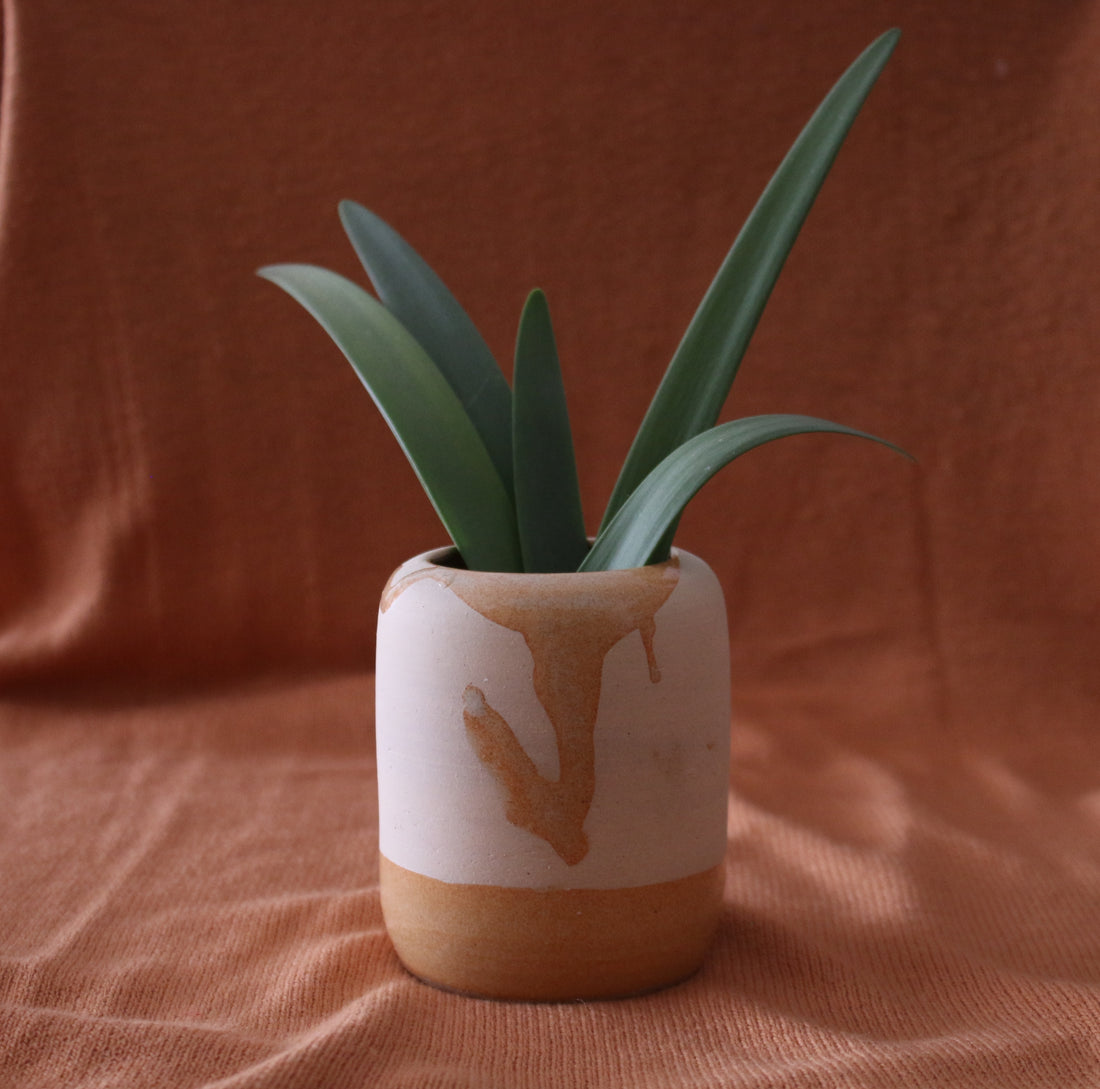
Recommended for Beginners! 7 Tips to Get Started with Pottery Design
This article is aimed at beginners in pottery who want to create their own works from scratch. Touching clay can connect the body and creativity for modern people who lead busy daily lives.
While we are surrounded by dozens of diverse designs in the form of mugs, plates, and more, and social media is overflowing with ideas for creating original objects, it might be difficult for beginners who have just entered the world of pottery to find a design they like or something that feels like their own style.
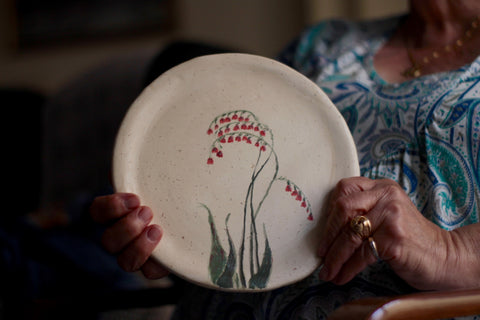
For those who are taking a pottery class or planning to try pottery at home for the first time but aren't sure how to design their pieces, we would like to introduce 7 tips that will serve as a guide and provide inspiration.
Tip 1: Start using your hands. Find the shape of your work through hand-building.
Whether at home or in a pottery class, when you first experience clay, it is important to have fun and expand your imagination. One of the most common questions regarding this recommendation is, "How can I set myself free?"
We recommend starting your first work with the hand-building technique. This technique involves shaping clay using your hands without relying on other elements like an electric potter's wheel. When you aren't sure what you want to make, or your style isn't set, the most effective method is to simply pick up the clay and let your fingers move freely to start creating a shape. Pinch, stretch, pat, bend the clay... You can also make coils and stack them until they take the form of a vase, cup, or something else.

As you deform the clay with your hands, your creativity will be awakened, and you will be able to envision what kind of shape you want your work to have. Even if you can't think of the final outcome at first, ideas will inevitably emerge during the process, so please dare to touch the clay and feel it with your hands using hand-building.
Tip 2: Think of simple designs.
When you think of designs and make sketches, you might try many different options, but often you won't be satisfied with any of them. You might think something is missing, or conversely, that the design looks too heavy. Also, while you want to create a wonderful piece with detailed work, we understand that as beginners, it is often difficult to achieve the desired results due to a lack of practice.
If you reach this point where your design becomes complex and difficult to execute, we recommend starting again from zero and drawing simple decorations or shapes. Many popular items you see on the internet, in magazines, or on sales rankings have very simple, or even minimalist, designs. Basic shapes like circles and triangles can be very beautiful as patterns and can bring balance to your work. You can draw the same figure repeatedly over the entire surface of the clay or just on a part of it, which you can use depending on the finish you want.
Additionally, for pieces with a stable rectangular body or curves that catch the viewer's eye, simply drawing straight lines when applying underglazes or glazes can create an interesting and lovely design.


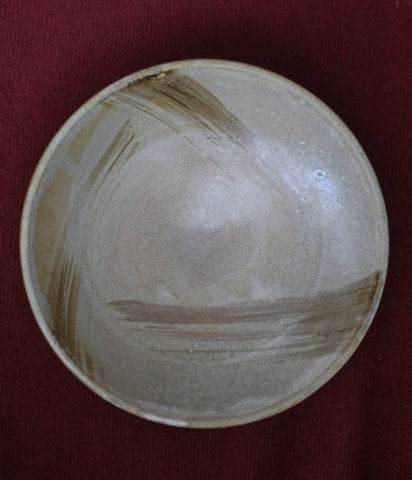
Also, drawing patterns on clay randomly with a brush is an easy and interesting method.
The brush will leave original patterns on your work and provide a sense of dynamism.
Tip 3: Designs using glaze.
Also, pieces without patterns or pictures can become very beautiful with the color of the glaze. Applying glaze by hand, without relying on mechanical processes, always results in a unique and original finish. Because each one is done by hand, the individuality of the finish emerges depending on the thickness of the glaze, the application time, the number of layers, and how you use the glaze.
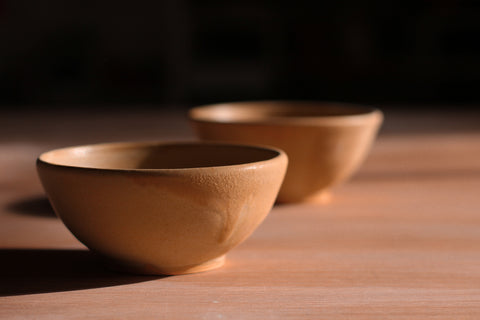
If the piece is not intended for food and drink, you can also leave part of it unglazed. The color of the earthenware can highlight the color of the glaze or create a contrast, becoming a part of the piece's design. You can apply wax or tape to the areas where you want to keep the earthenware color and leave them unglazed. Another technique for glazing only part of a piece is to dip it in glaze up to your desired height. This allows you to express separated shades of color. Challenge yourself with designs using glaze, fail, improve, and enjoy it!

Tip 4: Learn from your surroundings.
When you think about a design, you probably often sit down with a pencil and paper to try to come up with ideas using your imagination. But sometimes, you just can't be satisfied with what you come up with.
In such cases, we recommend standing up from your chair, taking a walk, or walking around your house to look at the things around you. If you look closely, things in your daily life—like plants, wallpaper patterns, road signs, or the shape of fruit—can become triggers that provide inspiration.


Tip 5: Pottery works on the internet.
This is very obvious, but we often search for works on the internet to get ideas. Digital platforms like Pinterest, Instagram, and Google Image Search are huge catalogs that help us visualize the designs we want.

To avoid being overwhelmed by all the information available in the virtual world, we recommend creating a folder on your computer or mobile phone to save images that will serve as inspiration for your next design. Some of the aforementioned applications also have features that allow you to create collections of photos and images, so you can see models that caught your eye in the same place immediately.
Tip 6: Experience culture.
Looking for ideas for your work from cultural materials that interest you is also a good method. For example, if you like Nordic culture, looking at books or websites written about it will surely give you images that provide inspiration. When you become interested in a certain culture, the way it manifests—such as its food, clothing patterns, or legends—becomes a very powerful source of inspiration for our creativity.


You can start by imitating designs you've seen in exhibitions or books, and gradually modify them to fit your own style.
Tip 7: Don't limit yourself! Your potential is infinite.
Our final piece of advice is to "design freely." It is common to feel limited by thoughts like, "What if I fail?" "Isn't it too difficult?" or "Other people are doing similar designs, so I can't do anything new."
However, the charm of creating pottery lies in the fact that there is a wide range of creation and it holds many possibilities. Each potter can shape and decorate according to their own preferences. Clay is an element that changes in hardness over time, and its color changes depending on the lot, which creates variations in design. When you think about what kind of work you want to make, what kind of decoration you want to apply, or what colors you want to use, the most important thing is to give it a try, touch the clay, draw without fear of failure, look at your sketches again, compare results using different tools, and start over from the beginning if necessary.

Summary
Plates, cups, vases, accessories, decorative items, sculptures... you can design all of these yourself!
As you can see, there are many ways to think about designs in your own style. Use these 7 tips as a reference to create your own original pottery works.
About the author
Pottery Tocoton
Currently operating a pottery studio in Osaka City.
We also conduct pottery experiences and classes in Japanese, English, and Spanish.
https://tougei-tocoton.com