
What is a Haniwa?
Haniwa are terracotta clay figures that appeared during the Kofun period (mid-3rd to 6th century). They were used for funerary rituals and placed alongside the remains of high-ranking nobles. Haniwa come in two main types: cylindrical and figurative, with the latter modeled after people, animals, and objects.
While they were initially very simple in their decoration and function, they became more realistic over time.
What were the functions and roles of Haniwa?
While there are various theories, it is generally said that haniwa served to protect the deceased. Cylindrical haniwa were buried along the boundaries of the tomb, acting as a barrier separating the world of the living from the world of the dead.
With their dual nature of defense and offense, they are believed to have played a role in warding off evil spirits and disasters. Theories suggest that human and animal haniwa arranged in processions or groups represent funeral rites or reenact the political/religious rituals (succession ceremonies of tribal chiefs) performed during the deceased's lifetime.
Regarding the function of house-shaped haniwa, there are two theories: one is that they were considered a dwelling place for the spirit of the deceased, and the other is that they represent the residence where the deceased lived while alive.

How were the Haniwa designed?
While researching Japanese ceramics, my attention was drawn to human-shaped haniwa. Although once used in funerals, I wondered how their primitive yet charming designs could be incorporated into our modern lives.
We were very conscious of not deviating from the original forms so that viewers would immediately recognize them as haniwa, while simultaneously ensuring they blend into the interiors of modern homes and spaces.
For this reason, we made the expressions slightly more detailed than those made in the Kofun period, so that one can sense the feelings reflected in their faces. Some have more primitive forms, providing a wide variety, but most are unique and designed to resonate with the viewer's emotions.
The arms of the haniwa are a key design element that gives them movement and personality. Unlike the original haniwa, these pieces appear to be in the middle of an action or dance. This adds further expressiveness, resulting in a modern take on the original work.

What are Haniwa made of?
These haniwa are made from clay from Shigaraki, Shiga Prefecture. We use white and red clay, adding small stones to create depth in the texture and color. You can see the color of the pottery at the base of the figures.
For the glaze, we use different light and dark tones to suit your preferences and placement. The "Toast" haniwa is unglazed, and the color seen is that of the natural red Shigaraki clay.
How should I use Haniwa at home?
People are spending more and more time at home these days. Plants and decorations are part of our landscape, staying close to our daily lives.
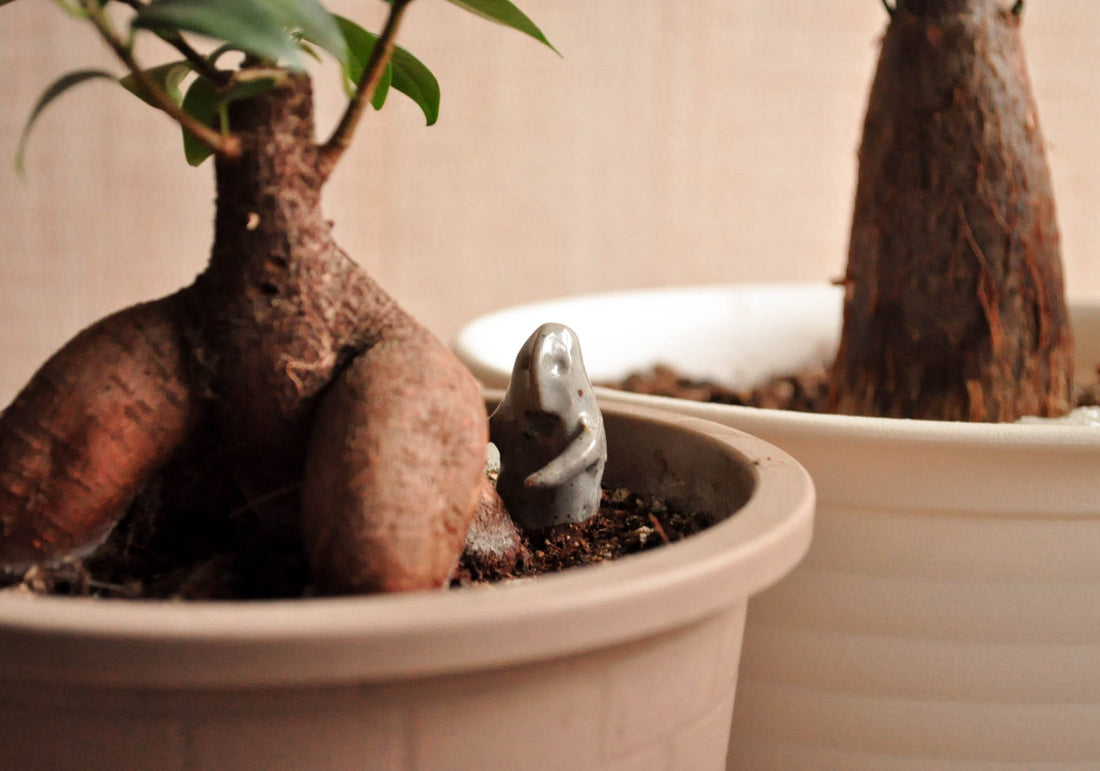
Haniwa not only color your space but also become our companions. First, we recommend placing a haniwa next to a plant.
Because they are cylindrical, you can bury part of their body in the soil of a pot, allowing their face and upper body to be visible. The combination of plants and haniwa is a perfect way to make your living space fun and your garden feel more like your own.
If you purchase one with arms, you can use them to hang rings or jewelry. Similarly, haniwa without arms can be used as a ring stand by winding jewelry around their torso.
Haniwa can become the guardian of your precious rings. Finally, haniwa also function well as simple decorations.
You can place them next to books on a shelf or among other objects as part of your interior decor. Haniwa are pieces that stimulate the viewer's curiosity and accompany you in your daily life.


How should I care for Haniwa?
Wash the haniwa with a small amount of water and let them dry with a cloth or naturally. As they are ceramic, please handle them with care, as the arm sections can be fragile. If you place a white clay haniwa in potting soil, the unglazed parts may discolor due to the natural pigments in the soil.
What is the difference in Haniwa colors?
What our chosen colors have in common is that they suit the natural colors of plants very well and accentuate the unique nature of handmade items. There are no flat or overly bold colors. They are designed to harmonize with home decor and plants without creating an inorganic atmosphere or feeling out of place.
The differences in color are due to the selection of glazes. We have given them names inspired by their individual personalities.
The "Rock" haniwa is a color similar to stone, but also features brown speckles due to the iron content in the glaze.
The "Light" (Hikari) haniwa has a very pale hue that brings a sense of light to its surroundings. The "Toast" haniwa is named for its soft, baked clay color that looks like toasted bread.
(This piece is not glazed.)
Click here for Tougei Tocoton's Haniwa.
